
Website: BollywoodView.com
Author: AK
Calgary commuters are set to benefit from a major transportation milestone as the new Ivor Strong Bridge on Deerfoot Trail (Highway 2) officially opens to traffic on July 27. The bridge is a key component of Alberta’s multi-year Deerfoot Trail Improvement Project, designed to reduce congestion, improve safety, and support the city’s rapidly growing population.
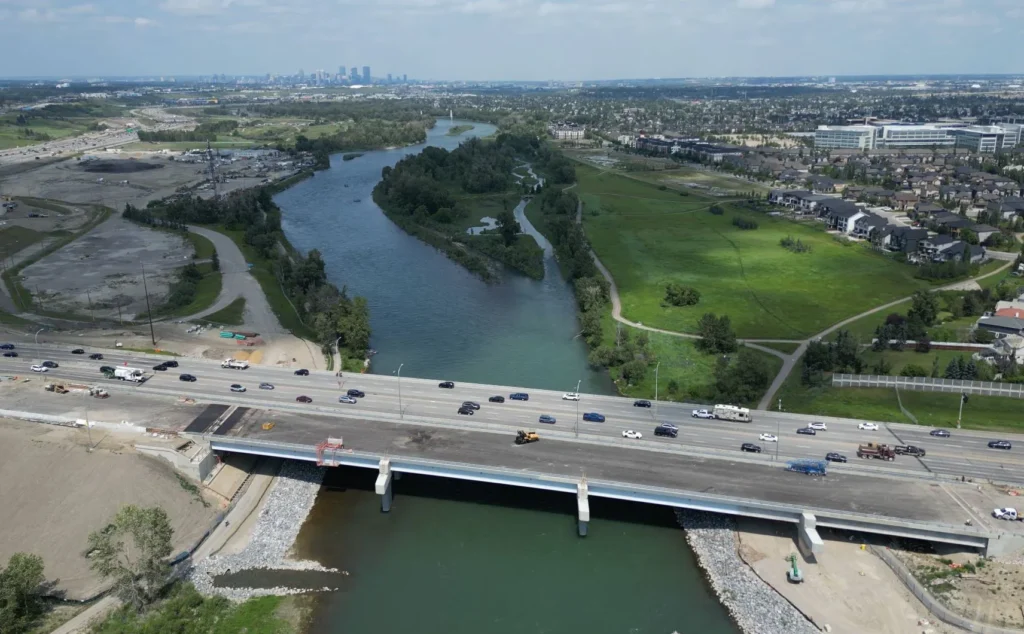
The opening is expected to improve traffic flow across one of Canada’s busiest urban highways, particularly for commuters travelling between Calgary’s southern communities and the city centre.
Where Is the Ivor Strong Bridge?
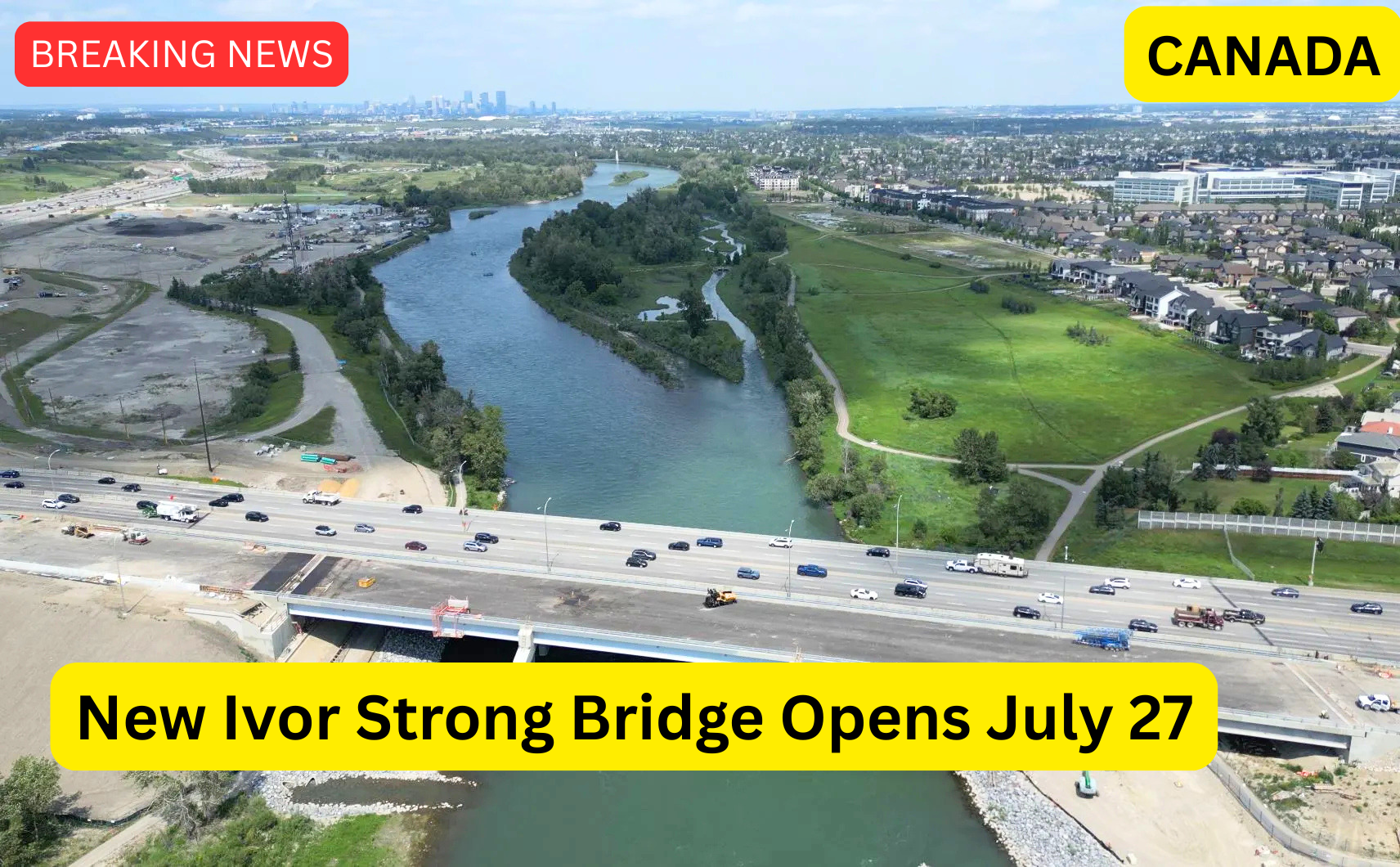
The Ivor Strong Bridge spans the Bow River in southeast Calgary.
It forms part of Deerfoot Trail (Highway 2), Alberta’s busiest highway, connecting:
- South Calgary communities
- Downtown Calgary
- North Calgary
- Highway 2 toward Red Deer and Edmonton
- Southbound Highway 2 toward Lethbridge
The bridge is located near the Anderson Road/Bow Bottom Trail interchange, one of Calgary’s busiest traffic bottlenecks.
Which Areas Will Benefit?
The upgraded bridge primarily improves travel for residents in:
- Douglasdale
- McKenzie Towne
- Cranston
- Seton
- Auburn Bay
- Riverbend
- Quarry Park
- Acadia
- South Calgary
- Downtown commuters
Commercial trucks using Highway 2 will also benefit from smoother traffic flow.
How Long Did Construction Take?
The bridge replacement and twinning project is part of the South Deerfoot Improvements, which began construction in 2023.
The overall Deerfoot Improvement Program is scheduled to continue until 2027, although the new bridge opens to traffic in July 2026, roughly three years after major construction began.
How Much Did It Cost?
The Ivor Strong Bridge is not a standalone project.
It is included in Alberta’s South Deerfoot Improvement Project, valued at approximately CAD $800 million, covering:
- Ivor Strong Bridge
- Glenmore Trail improvements
- Southland Drive interchange
- Anderson Road/Bow Bottom Trail upgrades
- Additional lane widening
Officials have not released a separate construction cost exclusively for the bridge itself.
Who Designed and Built the Project?
The South Deerfoot design-build project is being delivered by:
- Aecon Infrastructure Management (Lead Design-Build Contractor)
- PCL Construction (Construction Management)
- Volker Stevin Contracting Ltd.
Engineering and design support includes firms such as:
- Associated Engineering
- McElhanney
- COWI
- Stantec
- Dillon Consulting
No single individual engineer has been publicly identified as the project’s chief engineer because it is being delivered by a large multidisciplinary engineering team.
Why Was the Bridge Needed?
The original Ivor Strong Bridge had become one of Calgary’s biggest traffic bottlenecks.
Problems included:
- Heavy rush-hour congestion.
- Lane reductions.
- Limited merge space.
- Frequent rear-end collisions.
- Traffic volumes exceeding the bridge’s original design capacity.
According to Alberta Transportation, Deerfoot Trail now carries more than 180,000 vehicles every day, making it Alberta’s busiest highway.
Will It Solve Calgary’s Traffic Problems?
The bridge will significantly improve traffic, but it is not expected to eliminate congestion entirely.
Benefits include:
- Additional traffic capacity.
- Continuous southbound lanes over the Bow River.
- Better merge lanes.
- Reduced bottlenecks.
- Improved travel reliability.
- Safer lane transitions.
- Better freight movement.
However, Calgary’s growing population means Deerfoot Trail will continue to require future upgrades.
Benefits for Calgary Residents
The project is expected to deliver several long-term advantages:
- Shorter commute times.
- Fewer traffic delays.
- Improved road safety.
- Better emergency vehicle access.
- Reduced fuel consumption during peak traffic.
- Improved freight efficiency.
- Better connectivity between southern suburbs and downtown.
These improvements are especially important for one of Canada’s fastest-growing metropolitan areas.
Why Is the Bridge Named Ivor Strong?
The bridge is named after John Ivor Strong, who served as Chief Commissioner of Calgary until 1971. His leadership played a significant role in the city’s growth during the mid-20th century, and the bridge was named in recognition of his contributions.
Our Perspective (BollywoodView.com)
The opening of the new Ivor Strong Bridge marks an important milestone for Calgary’s transportation network. While it won’t completely solve congestion on Deerfoot Trail, it addresses one of the highway’s most persistent choke points. Combined with other ongoing upgrades, the bridge should provide noticeable improvements for daily commuters, commercial transport, and emergency services.
As Calgary continues to grow, projects like this are essential to keeping traffic moving efficiently and supporting future economic development.
At BollywoodView.com, we base our infrastructure coverage on official government project information, engineering updates, and verified reporting. Technical details may evolve as the broader Deerfoot Trail Improvement Project progresses toward its planned completion in 2027.
Frequently Asked Questions (FAQs)
Where is the Ivor Strong Bridge located?
The bridge crosses the Bow River on Deerfoot Trail (Highway 2) in southeast Calgary near the Anderson Road and Bow Bottom Trail interchange.
When does the new bridge open?
The new Ivor Strong Bridge opens to traffic on July 27, 2026.
How much did the project cost?
The bridge is part of the CAD $800 million Deerfoot Trail Improvement Project. A separate cost for the bridge has not been disclosed.
How long did construction take?
Major construction began in 2023, with the bridge opening in 2026, while the wider Deerfoot improvement program continues through 2027.
Who built the bridge?
The project is being delivered by Aecon Infrastructure Management, PCL Construction, and Volker Stevin Contracting, supported by several engineering firms.
Will the new bridge reduce traffic?
Yes. It is expected to improve traffic flow, reduce bottlenecks, and increase safety, although it is not expected to eliminate congestion across Deerfoot Trail entirely.

- Ion Exchange Shares Slide 8% After Q1 Profit Plunges 92%: Here’s What Happened
- Swiggy’s FY31 Roadmap Sends Shares Higher: What Investors Need to Know
- Titan Stock at All-Time High: What’s Fueling Investor Optimism Before Q1 Earnings?
- Could Hardik Pandya Captain KKR in IPL 2027? Here’s Why the Move Is Being Discussed
- 10 Best Indian Movies to Watch This Independence Day 2026



One thought on “New Ivor Strong Bridge Opens July 27: Which Areas Does It Connect, Project Cost, Construction Timeline & How It Will Ease Calgary Traffic”