
Website: BollywoodView.com
Author: AK
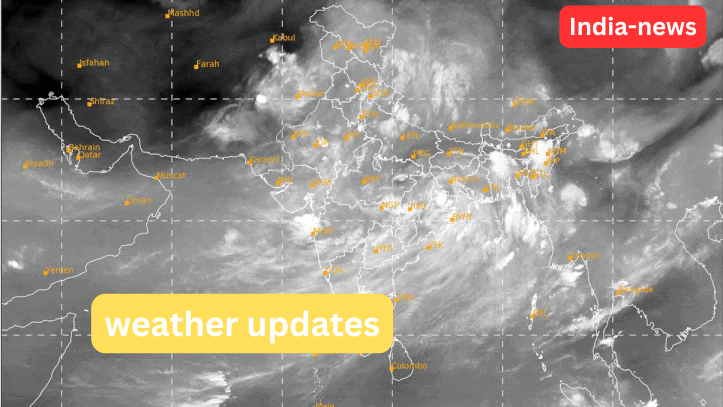
For months, meteorologists warned that the powerful “Godzilla El Niño” could weaken India’s 2026 southwest monsoon, raising concerns about below-normal rainfall, heatwaves, and water shortages. However, recent satellite images have surprised many people, showing nearly 95% of India covered by clouds.
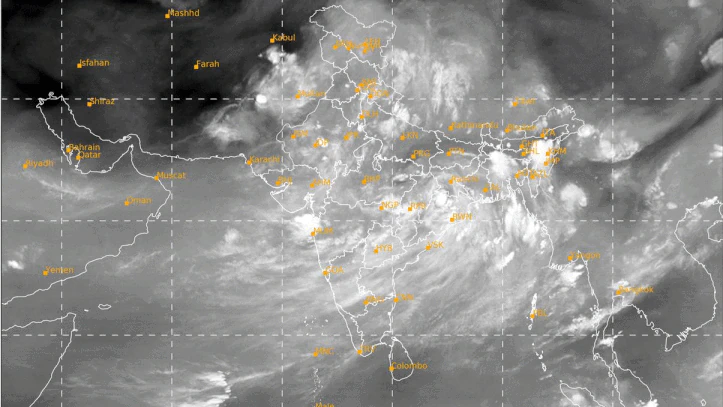
This has left millions wondering:
- If El Niño usually reduces monsoon rainfall, why is almost the entire country cloudy?
- Has El Niño become weaker?
- Will India still receive normal rainfall?
- What do weather experts actually say?
The answer is more complex than it appears. Cloud cover does not automatically mean heavy rainfall, and several weather systems are currently interacting with the monsoon, temporarily overpowering the typical effects of El Niño.
What Is “Godzilla El Niño”?
El Niño is a natural climate phenomenon that occurs when sea surface temperatures in the central and eastern Pacific Ocean become warmer than normal.
A particularly intense event is sometimes nicknamed “Godzilla El Niño” because of its exceptional strength.
Historically, strong El Niño events have often been linked to:
- Weaker Indian monsoons.
- Reduced rainfall in many regions.
- Longer dry spells.
- Higher summer temperatures.
- Increased risk of drought in parts of India.
However, El Niño does not determine the monsoon by itself.
Why Is 95% of India Cloudy?
According to weather experts, several factors are currently contributing to widespread cloud cover:
1. An Active Southwest Monsoon
The southwest monsoon has become active across large parts of India.
Moisture-laden winds from the Arabian Sea and the Bay of Bengal are transporting huge amounts of water vapour across the country, leading to extensive cloud formation.
2. Multiple Low-Pressure Systems
Recent low-pressure areas and monsoon troughs have strengthened rainfall over many regions.
These systems often generate widespread cloud cover, even in places where rainfall remains light.
3. Bay of Bengal Moisture
The Bay of Bengal continues supplying abundant moisture to eastern, central, and northern India.
This moisture spreads inland, creating dense cloud bands over vast areas.
4. Western Disturbances
In northern India, occasional western disturbances interact with the monsoon, enhancing cloud formation and rainfall over the Himalayan states.
Does Cloud Cover Mean Heavy Rain Everywhere?
No.
This is one of the biggest misconceptions.
Clouds indicate moisture in the atmosphere, but they do not guarantee heavy rainfall.
Some regions may experience:
- Continuous rain.
- Thunderstorms.
- Drizzle.
- Overcast skies without rain.
- Dry weather despite thick cloud cover.
Rainfall depends on atmospheric instability, wind patterns, and local weather conditions.
Is El Niño Still Active?
Yes.
Climate agencies continue to monitor El Niño conditions, but experts note that its influence on India’s weather can vary depending on:
- The strength of the monsoon circulation.
- Indian Ocean temperatures.
- Madden-Julian Oscillation (MJO).
- Regional low-pressure systems.
- Atmospheric circulation patterns.
In some years, these factors partially offset El Niño’s typical drying effect.
What Are Weather Experts Saying?
Meteorologists emphasize that El Niño is only one of many climate drivers affecting India’s monsoon.
According to experts:
- A strong monsoon pulse can temporarily dominate weather patterns.
- Active low-pressure systems can produce widespread rainfall despite El Niño.
- The relationship between El Niño and India’s rainfall is not absolute.
- Climate change is also making weather systems more variable and less predictable.
This means that even during a strong El Niño year, India can still experience periods of heavy rainfall and widespread cloud cover.
Will India Receive Normal Monsoon Rainfall?
It is still too early to draw final conclusions.
The monsoon season continues through September, and rainfall patterns may change depending on:
- Future low-pressure systems.
- Monsoon trough movements.
- Sea surface temperatures.
- El Niño intensity.
- Indian Ocean conditions.
The India Meteorological Department (IMD) continues to monitor these developments and regularly updates its seasonal outlook.
Why Are Satellite Images Showing So Many Clouds?
Modern weather satellites capture all cloud types, including:
- Rain-bearing clouds.
- High-altitude cirrus clouds.
- Monsoon cloud bands.
- Thunderstorm systems.
- Moisture-rich cloud layers.
As a result, satellite images can show nearly complete cloud coverage even if rainfall is uneven across different states.
What Does This Mean for Farmers?
For farmers, widespread cloud cover can have both positive and negative effects.
Benefits
- Better soil moisture.
- Improved reservoir inflows.
- Reduced heat stress on crops.
- Support for Kharif crop growth.
Challenges
- Waterlogging in some regions.
- Crop diseases caused by prolonged humidity.
- Delays in harvesting.
- Flooding in vulnerable districts.
Could the Weather Change Again?
Yes.
India’s monsoon remains highly dynamic.
Heavy rainfall in one week can quickly be followed by dry conditions if:
- Low-pressure systems weaken.
- The monsoon trough shifts.
- El Niño’s influence becomes stronger later in the season.
This is why meteorologists rely on weekly forecasts rather than judging the entire season based on current cloud cover.
Our Perspective (BollywoodView.com)
The widespread cloud cover over India highlights an important lesson about weather: clouds and rainfall are not the same thing. While El Niño often reduces monsoon rainfall, it is only one factor influencing India’s climate. Active monsoon winds, low-pressure systems, and abundant moisture from the Arabian Sea and Bay of Bengal are currently playing a larger role, resulting in extensive cloud cover across much of the country.
Rather than assuming El Niño has “failed,” experts say the situation demonstrates how multiple atmospheric systems interact. The true measure of the monsoon will be the total seasonal rainfall and its distribution—not satellite images alone.
At BollywoodView.com, we base our weather reporting on information from the India Meteorological Department (IMD), global climate agencies, and established meteorological research. Weather patterns are continually evolving, and forecasts may change as new data becomes available.
Frequently Asked Questions (FAQs)
What is Godzilla El Niño?
It is an informal nickname for an exceptionally strong El Niño event, characterized by unusually warm sea surface temperatures in the central and eastern Pacific Ocean.
Why is India cloudy despite El Niño?
An active southwest monsoon, low-pressure systems, abundant moisture from the Bay of Bengal and Arabian Sea, and other atmospheric conditions are currently producing widespread cloud cover.
Does 95% cloud cover mean heavy rain everywhere?
No. Cloud cover does not necessarily translate into heavy rainfall. Some areas may remain mostly dry despite overcast skies.
Has El Niño ended?
No. El Niño conditions are still being monitored, but its effects can be modified by other weather systems influencing the Indian monsoon.
Will India still receive normal monsoon rainfall?
It is too early to say. The final outcome depends on weather conditions through the remainder of the monsoon season, and the IMD continues to issue updated forecasts.
Why are weather experts not surprised?
Meteorologists note that India’s monsoon is influenced by multiple climate systems. El Niño is important, but it is only one part of a much larger and more complex weather pattern.


- Ion Exchange Shares Slide 8% After Q1 Profit Plunges 92%: Here’s What Happened
- Swiggy’s FY31 Roadmap Sends Shares Higher: What Investors Need to Know
- Titan Stock at All-Time High: What’s Fueling Investor Optimism Before Q1 Earnings?
- Could Hardik Pandya Captain KKR in IPL 2027? Here’s Why the Move Is Being Discussed
- 10 Best Indian Movies to Watch This Independence Day 2026



One thought on “Godzilla El Niño Was Expected to Weaken India’s Monsoon—So Why Is 95% of the Country Still Cloudy? Weather Experts Explain the Reality”