By Eliza Mathew | BollywoodView.com
BREAKING NEWS : UK Proposes Midnight Social Media Curfew For Teens Aged 16 And 17
UK : The UK government is considering a midnight social media curfew for 16 and 17-year-olds as part of wider online safety measures. Here’s what has been proposed, why it’s being discussed, and what could happen next.
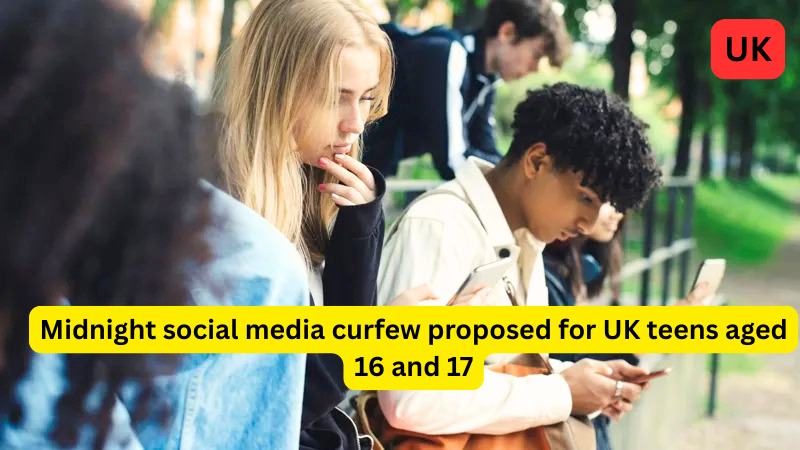
Could Teenagers Soon Be Logged Out Of Social Media At Midnight?
The UK government is exploring a proposal that could change how teenagers use social media late at night.
Officials are considering a digital curfew that would automatically restrict access to social media platforms for 16 and 17-year-olds after midnight, with the aim of promoting healthier sleep habits and reducing the potential impact of excessive late-night screen time.
The proposal is still under discussion and has not become law, but it has already sparked debate among parents, educators, technology companies and young people across the country.
ALSO READ : Who Is Kate Harrisson? UK Appoints Veteran Diplomat As New Trade Commissioner For China And Hong Kong
What Is Being Proposed?
Under the proposal being examined by UK ministers, social media platforms could be required to introduce features that prevent or significantly limit access for users aged 16 and 17 during overnight hours.
While no final rules have been announced, discussions have focused on restrictions beginning at midnight, encouraging teenagers to disconnect and prioritise sleep.
The proposal forms part of the government’s wider efforts to improve children’s online safety and digital wellbeing.
Why Is The Government Considering A Curfew?
Health experts have increasingly warned that excessive screen time late at night may contribute to:
- Poor sleep quality
- Reduced concentration at school
- Anxiety and stress
- Digital dependency
- Lower overall wellbeing
Teenagers often remain active on social media long after bedtime, and many studies have linked late-night device use with disrupted sleep patterns.
The government says encouraging healthier online habits is becoming an important public health issue.
How Would It Work?
No final technical details have been confirmed.
However, options reportedly being discussed include:
- Automatic account restrictions after midnight.
- Built-in “sleep mode” features.
- Platform-level age-based controls.
- Greater parental control options.
Technology companies would likely be responsible for implementing any future requirements if legislation is introduced.
Not Everyone Supports The Idea
The proposal has already divided opinion.
Supporters argue:
- Better sleep improves mental health.
- Teenagers need stronger online protections.
- Digital platforms should share responsibility for young users’ wellbeing.
Critics argue:
- Enforcement could prove difficult.
- Age verification remains a challenge.
- Some teenagers use social media for education, family communication and emergencies.
- Parents, rather than governments, should decide household screen-time rules.
As a result, the debate extends well beyond technology and into questions of personal freedom and parental responsibility.
SparkChronicle Perspective: The Bigger Question Isn’t Midnight—It’s Digital Balance
The discussion isn’t really about one specific hour.
It’s about how society manages the growing influence of digital platforms on young people’s daily lives.
Today’s teenagers have grown up online.
Unlike previous generations, social media isn’t simply entertainment—it’s also where friendships, education, news and communication increasingly take place.
That makes any attempt to regulate online behaviour far more complex than imposing a traditional bedtime.
The challenge for governments is finding a balance between protecting young people and respecting personal choice.
Could Other Countries Follow?
If the UK eventually introduces a midnight social media curfew, other governments may closely watch the results.
Countries around the world are already strengthening online safety laws covering:
- Age verification.
- Harmful content.
- Children’s privacy.
- Algorithm transparency.
- Screen-time management.
The UK’s proposal could become another important step in the global debate over how digital platforms should protect younger users.
Our Perspective
At BollywoodView.com, we believe discussions about online safety should focus on evidence rather than emotion.
Healthy sleep, mental wellbeing and responsible technology use are important goals.
However, any restrictions should also be practical, transparent and respectful of individual rights.
Whether a midnight curfew becomes law or not, the wider conversation about balancing technology with wellbeing is unlikely to disappear.
Final Word
The proposed midnight social media curfew for 16 and 17-year-olds is still at the consultation stage, and no final decision has been made.
But the proposal highlights a growing concern shared by parents, educators and policymakers:
How can teenagers enjoy the benefits of social media without allowing it to interfere with health, education and everyday life?
The answer may shape digital policy in the UK—and possibly beyond—for years to come.
Frequently Asked Questions
Is the UK introducing a midnight social media ban?
Not yet. The government is considering the proposal, but no law has been passed and no implementation date has been announced.
Who would be affected?
The proposal focuses on teenagers aged 16 and 17 using social media platforms during late-night hours.
Why is the government discussing this?
The aim is to encourage healthier sleep habits, improve young people’s wellbeing and reduce excessive late-night social media use.
Has the proposal become law?
No. It remains under discussion, and ministers have not announced any final legislation or implementation timeline.

- Ion Exchange Shares Slide 8% After Q1 Profit Plunges 92%: Here’s What Happened
- Swiggy’s FY31 Roadmap Sends Shares Higher: What Investors Need to Know
- Titan Stock at All-Time High: What’s Fueling Investor Optimism Before Q1 Earnings?
- Could Hardik Pandya Captain KKR in IPL 2027? Here’s Why the Move Is Being Discussed
- 10 Best Indian Movies to Watch This Independence Day 2026