
In a dazzling display of tactical mastery, explosive power, and unwavering mental fortitude, 22-year-old Indian judoka Asmita Dey has etched her name into the history books by capturing the Gold Medal in the women’s extra-lightweight (48kg) division at the Commonwealth Games.
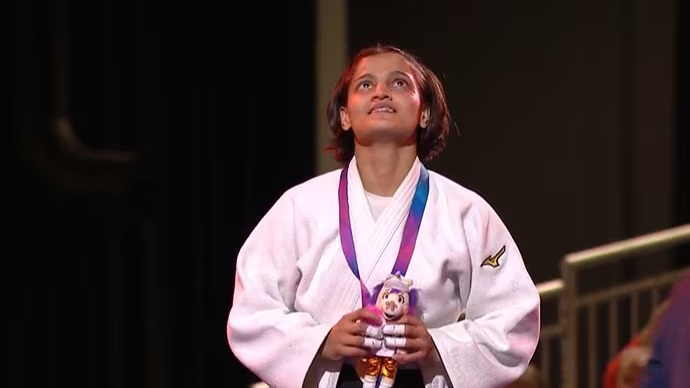
Fighting through a high-caliber field at the Scottish Event Campus (SEC) Precinct in Glasgow, Asmita delivered a flawless campaign, culminating in an emphatic victory in the final. Her triumph not only marks a crowning achievement in her rapidly escalating athletic career but also signifies a watershed moment for Indian combat sports on the international stage.
The Golden Campaign: How Asmita Dey Conquered the 48kg Division
Entering the tournament as one of the top seeds in the women’s 48kg category, Asmita demonstrated remarkable tactical maturity throughout the competition, executing a series of dominant performances from the opening rounds to the final contest.
                          ASMITA DEY'S GOLDEN ROAD
                                      │
         ┌────────────────────────────┼────────────────────────────┐
         ▼                            ▼                            ▼
   QUARTERFINAL                  SEMIFINAL                       FINAL
• Controlled Grip-Fight       • Tactical Counter-Attack      • Flawless Ippon
• Victory via Waza-ari        • Win via Shido Penalties      • CWG Gold Medal
1. Opening Rounds & Quarterfinal Dominance
Asmita began her gold-medal pursuit with supreme composure. In her opening bouts, she established total control over the grip-fighting (kumi-kata) phase, neutralizing her opponents’ offensive entries. In the quarterfinal match, she utilized a sharp, low-center-of-gravity O-uchi-gari (inner leg reap) to score a clean waza-ari, smoothly transitioning into ground control (ne-waza) to run down the clock and secure a place in the medal rounds.
2. Semifinal Tactical Masterclass
In the semifinal, facing an aggressive opponent known for high-amplitude shoulder throws, Asmita showcased defensive brilliance. By maintaining distance and countering with rapid directional changes, she forced her opponent into technical errors and excessive defense. Asmita capitalized on these mistakes, earning penalties (shidos) against her adversary while landing a decisive counter-throw (Ura-nage) in the final minute to seal her spot in the gold medal bout.
3. The Final: Securing Gold with an Explosive Ippon
The gold medal contest proved to be a masterclass in timing and precision. Facing a tough competitor from a traditional judo powerhouse nation, Asmita remained patient during early exchanges.
Just two minutes into the bout, as her opponent attempted a forward movement to establish an over-the-shoulder grip, Asmita executed a lightning-fast Seoi-nage (shoulder throw). The execution was clean, forcing her opponent flat onto her back to score a definitive Ippon—the martial arts equivalent of a knockout—instantly ending the match and securing the gold medal for India.
Who is Asmita Dey? The Journey of a Champion
Asmita Dey’s rise to the pinnacle of Commonwealth judo is a testament to grit, sacrifice, and relentless discipline.
- Hometown & Roots: Hailing from Tripura, a state in Northeast India renowned for producing world-class gymnasts and martial artists, Asmita was drawn to judo at a young age due to its combination of physical strength and mental discipline.
- Early Training & Development: Recognized early on for her speed, endurance, and natural balance, she joined specialized sports academies where she refined her technique under national coaches.
- International Breakout: Prior to her Commonwealth Games triumph, Asmita signaled her potential on the global stage by winning a prestigious gold medal at the Junior Asian Judo Championships and securing podium finishes at senior Asian Open events.
. https://bollywoodview.com/why-tata-power-chose-odisha-for-its-new-investment-key-reasons-explained/
What Makes Asmita Dey’s Gold Medal Historic?
- Rare Gold in Judo for India: Historically, India’s medals at multi-sport global events like the Commonwealth Games and Asian Games have predominantly come from wrestling, boxing, shooting, and weightlifting. Asmita’s gold medal represents one of the rare instances of an Indian combat athlete claiming top honors in judo.
- Elevating Northeast India’s Sporting Legacy: Asmita adds to the rich tradition of sports stars emerging from India’s Northeastern region, following in the footsteps of icons like Mary Kom, Mirabai Chanu, and Sushila Devi Likmabam.
- Inspiration for Women in Combat Sports: Her victory provides a massive psychological boost for young female athletes across India, proving that Indian judokas can systematically outmatch global competition at the highest levels.
Key Stats & Tournament Overview
| Parameter | Details |
| Athlete | Asmita Dey |
| Country | India |
| Sport & Category | Judo – Women’s 48kg (Extra-Lightweight) |
| Medal Won | Gold Medal |
| Winning Throw in Final | Seoi-nage (Shoulder Throw) for Ippon |
| Key Prior Achievement | Gold Medalist, Asian Junior Judo Championships |
Technical Analysis: Asmita’s Winning Fighting Style
Martial arts analysts point to three core technical strengths that fueled Asmita’s gold-medal campaign:
- Superior Kumi-kata (Grip Control): Asmita rarely allows her opponents to establish their preferred dominant sleeve or lapel grips. By controlling the collar first, she dictates the distance and tempo of every exchange.
- Explosive Transitions: Her ability to seamlessly switch from standing techniques (tachi-waza) to ground control (ne-waza) prevents opponents from catching their breath or resetting their defense.
- Adaptability Under Pressure: Whether dealing with orthodox or southpaw fighters, Asmita adjusts her stance and entry angles effortlessly, making her notoriously difficult to study and counter.
The Broader Impact on Indian Judo & Future Outlook
Asmita Dey’s historic achievement comes at a time when the Judo Federation of India (JFI) and national sports bodies are investing heavily in modern sports science, foreign exposure trips, and elite coaching support.
What’s Next for Asmita Dey?
With a Commonwealth Games gold medal officially around her neck, Asmita’s immediate focus shifts toward qualifying for the Asian Games and securing crucial Olympic qualification ranking points. Competing in the highly contested 48kg division globally, her CWG performance positions her as a serious contender for major international Grand Slams and World Championships in the coming Olympic cycle.
Frequently Asked Questions (FAQs)
Who is Asmita Dey?
Asmita Dey is an elite Indian judoka competing in the women’s 48kg (extra-lightweight) category. She is a Commonwealth Games Gold Medalist and an Asian Junior Champion.
Which weight category did Asmita Dey win gold in?
She won the gold medal in the Women’s 48kg (Extra-Lightweight) division.
How did Asmita Dey win her final match?
Asmita won her final bout by scoring an Ippon—the highest score in judo that instantly ends the match—using an explosive shoulder throw (Seoi-nage).
Where is Asmita Dey from?
Asmita Dey hails from the state of Tripura in Northeast India.
What are the major achievements of Asmita Dey prior to this?
Before winning Commonwealth Games gold, Asmita won a gold medal at the Asian Junior Judo Championships and secured podium finishes at several senior Asian Open tournaments.
Why is this victory significant for Indian sports?
Judo is traditionally dominated by East Asian and European powerhouses. Asmita’s gold medal is a historic breakthrough that elevates India’s profile in international judo and inspires a new generation of combat sports athletes.


- Ion Exchange Shares Slide 8% After Q1 Profit Plunges 92%: Here’s What Happened
- Swiggy’s FY31 Roadmap Sends Shares Higher: What Investors Need to Know
- Titan Stock at All-Time High: What’s Fueling Investor Optimism Before Q1 Earnings?
- Could Hardik Pandya Captain KKR in IPL 2027? Here’s Why the Move Is Being Discussed
- 10 Best Indian Movies to Watch This Independence Day 2026