
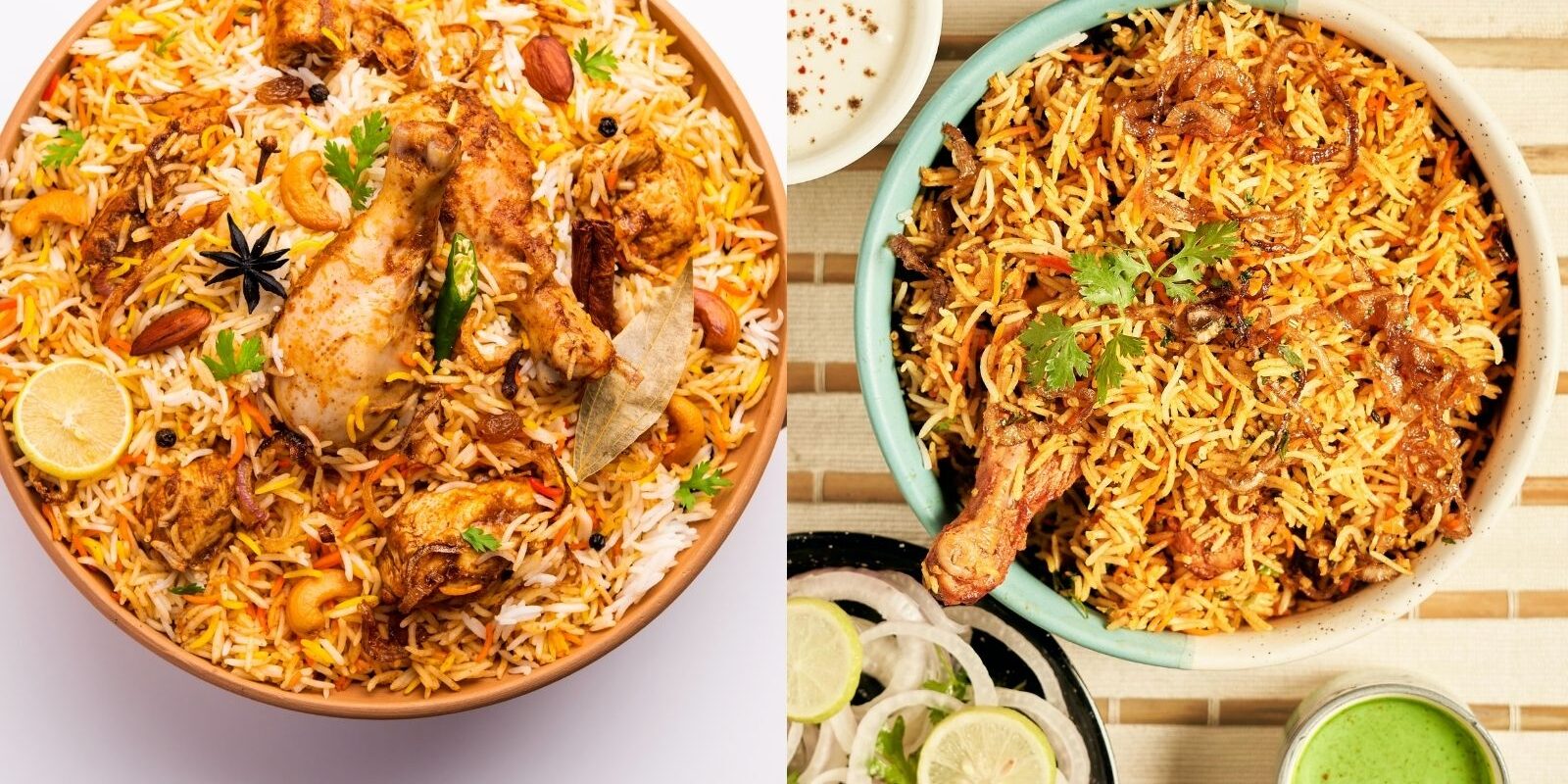
Biryani is far more than a simple rice dish—it is an iconic culinary tradition, a celebration of heritage, and a royal feast cherished around the world. While India boasts dozens of regional biryani variations, two legendary styles dominate the conversation: Hyderabadi Biryani and Lucknowi (Awadhi) Biryani.
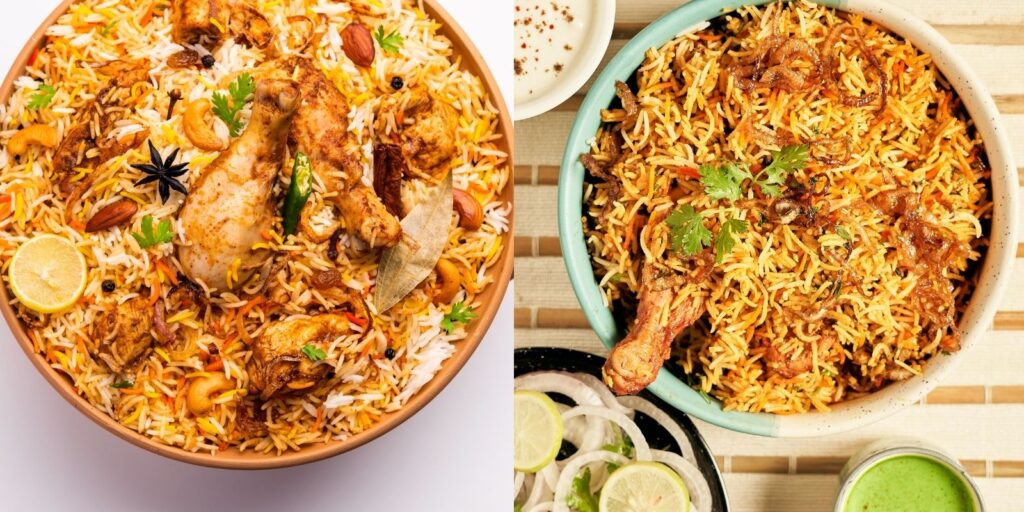
Although both dishes share royal origins and rely on premium long-grain Basmati rice, high-quality meat, and slow cooking, their underlying philosophies, preparation techniques, spice meters, and overall flavor profiles are vastly different.
1. History and Cultural Background
To truly appreciate what arrives in your plate, it helps to understand the distinct royal courts where these recipes were perfected over generations.
- Hyderabadi Biryani: Developed in the lavish kitchens of the Nizams of Hyderabad. This style represents a rich blend of Mughal court cuisine with native Deccan and South Indian culinary traditions. Incorporating souring agents like sour curd and lemon, alongside fiery local chilies and fresh mint, Hyderabadi biryani was created to deliver an immediate, intense, and unforgettable explosion of flavor.
- Lucknowi (Awadhi) Biryani: Born in the historic city of Lucknow under the patronage of the Nawabs of Awadh. The Awadhi royal chefs treated cooking as a refined art form where subtlety, aroma, and delicate balance reigned supreme. Instead of overwhelming the palate with heat, Lucknowi biryani was designed to perfume the senses with saffron, floral waters, and gentle spices that complement rather than overpower the tender meat.
2. Cooking Method: Kacchi Dum vs. Pakki Dum
The most fundamental technical distinction between these two culinary masterpieces lies in how the meat and rice are prepared and assembled before slow-steaming (Dum).
Hyderabadi Biryani (Kacchi Style)
- The Technique: Raw, un-cooked meat is heavily marinated in yogurt, papaya paste (a natural tenderizer), ginger, garlic, and robust spices. This raw marinated meat is placed directly at the bottom of a heavy-bottomed vessel (handi). Par-boiled Basmati rice (cooked to about 70%) is spread in layers over the raw meat.
- The Dum Process: The vessel is sealed air-tight with wheat flour dough (atta) and placed over low heat. As steam builds, the meat cooks slowly in its own natural juices and marrow, releasing intense vapors that rise through the rice, cooking it from below and infusing every single grain with deep flavor.
Lucknowi Biryani (Pakki Style)
- The Technique: The meat and rice are prepared separately first. The meat is gently simmered in a spiced broth known as a yakhni until it is soft and tender. The long-grain Basmati rice is separately boiled in spiced water or a portion of the broth until partially done.
- The Dum Process: The cooked meat and concentrated yakhni reduction are layered with the cooked rice in a vessel, sprinkled with saffron milk, ghee, and floral essences. The pot is sealed for a brief dum cycle—just long enough for the aromas to harmonize, ensuring the meat remains melt-in-your-mouth tender without overcooking.
. https://bollywoodview.com/best-hyderabadi-biryani-in-australia-2026-15-must-try-restaurants/
. https://bollywoodview.com/why-australia-tightened-student-visa-rules-for-indian-students-in-2026/
3. Spice Meter and Flavor Profile
The choice between these two dishes often comes down to individual spice tolerance and taste preferences.
Hyderabadi Spice Meter: [🌶️][🌶️][🌶️][🌶️][🌶️] (High Heat, Punchy, Bold)
Lucknowi Spice Meter:   [🌶️][🌶️][⚪][⚪][⚪] (Mild Heat, Floral, Subtle)
- Hyderabadi Biryani: Fiery green chilies, red chili powder, black pepper, garlic, and heavy garam masala create a bold, tongue-tingling heat. Tangy lemon juice and sour yogurt add a distinctive sharpness that cuts through the rich meat fat.
- Lucknowi Biryani: Raw chili heat is kept to a minimum. Instead, flavor is built using warm, aromatic whole spices such as green cardamom, mace, nutmeg, cloves, cinnamon, and yellow chili powder. It provides a velvety, smooth, and deeply aromatic profile rather than a sharp spicy burn.
4. Rice Texture, Layering, and Aromatics
- Rice Quality & Texture: Both styles insist on aged, long-grain Basmati rice. However, in Hyderabadi biryani, the rice features a delightful textural contrast—the bottom layers are heavily coated in rich, dark masala, while the top layers remain lighter and fluffy. In Lucknowi biryani, the rice grains are uniformly pale, soft, separate, and lightly coated in the rich essence of meat stock.
- Aromatics & Visuals: Hyderabadi biryani relies heavily on fresh coriander, mint leaves, golden-fried onions (birishta), and saffron, creating a colorful visual contrast of white, yellow, and deep brown rice grains. Lucknowi biryani favors subtle visual elegance, relying on saffron-infused milk along with kewra (screwpine) water, rose water, or a drop of meetha attar for a royal, floral fragrance.
5. Ingredient Comparison Table
| Feature | Hyderabadi Biryani | Lucknowi (Awadhi) Biryani |
| Cooking Style | Kacchi (Raw meat + layered rice) | Pakki (Pre-cooked meat in yakhni + layered rice) |
| Primary Spice Profile | Green chilies, red chili, pepper, garlic | Cardamom, mace, nutmeg, cinnamon |
| Aromatic Elements | Fresh mint, cilantro, fried onions (birishta) | Kewra water, rose water, saffron milk |
| Dominant Taste | Bold, spicy, tangy, intense | Delicate, aromatic, savory, smooth |
| Rice Visuals | Multi-hued (white, yellow, masala-stained) | Elegant pale/golden, uniform grains |
| Meat Texture | Tender with rich, clingy masala coat | Extremely soft, melt-in-the-mouth |
6. Accompaniments and Serving Style
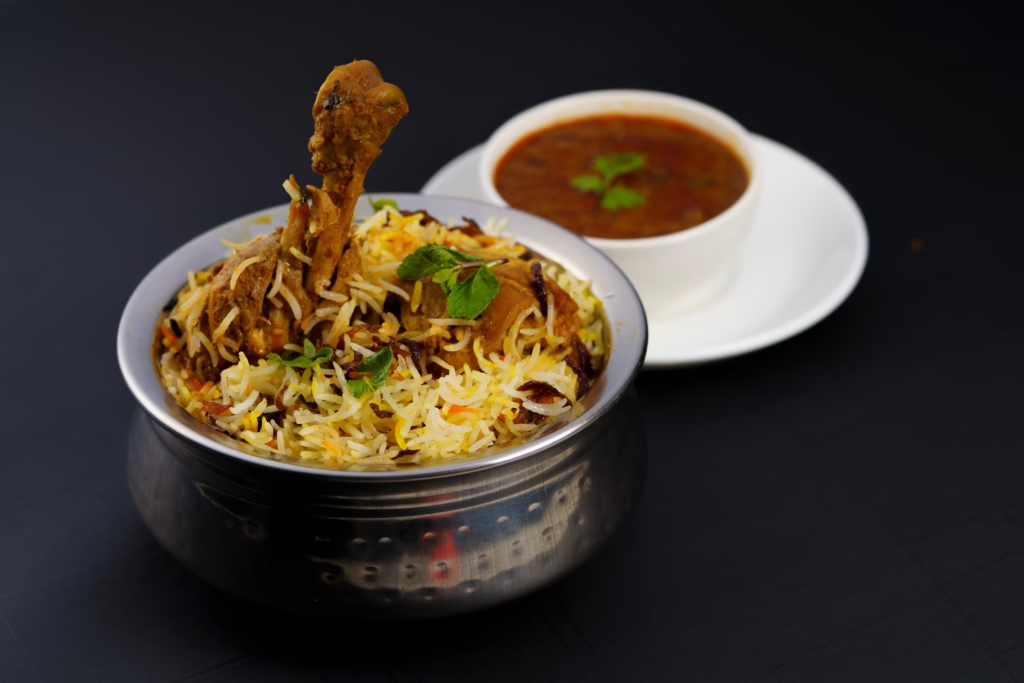
- Hyderabadi Sides: Traditionally served with Mirchi ka Salan—a thick, tangy, and spicy curry made from green chilies, peanuts, sesame seeds, and coconut—and Dahi ki Chutney (onion raita) to balance the high heat of the dish.
- Lucknowi Sides: Paired simply with a light Burani Raita (garlic-flavored yogurt) or enjoyed entirely on its own, ensuring no strong side dish overpowers the subtle scents and delicate flavor of the rice and broth.
7. Nutritional Aspect
- Oil and Fat Content: Both biryanis are celebratory, royal dishes that utilize ghee and oil. Hyderabadi biryani often contains slightly more oil/fat to fry large quantities of onions and brown the bottom masala layer. Lucknowi biryani relies more on natural fat rendered gently into the yakhni broth.
- Digestibility: Lucknowi biryani is generally gentler on the stomach due to its lower raw chili content and pre-cooked, tender meat. Hyderabadi biryani offers a higher spice kick that speeds up metabolism but can be heavy for spice-sensitive eaters.
8. “Best For…” Recommendations
- 🌶️ Love bold heat and spicy food? → Choose Hyderabadi Biryani
- 🌿 Prefer subtle, elegant, and aromatic flavors? → Choose Lucknowi Biryani
- 🍖 Want extra masala and punchy green herbs? → Choose Hyderabadi Biryani
- 🍚 Prefer soft, fluffy rice infused with meat broth? → Choose Lucknowi Biryani
9. Frequently Asked Questions (FAQs)
Which biryani is spicier?
Hyderabadi biryani is significantly spicier. It uses generous amounts of green chilies, red chili powder, black pepper, and garlic, whereas Lucknowi biryani focuses on warm, sweet spices like cardamom and mace without heavy chili heat.
Which biryani is more authentic?
Both are 100% authentic regional masterpieces with centuries of royal heritage. Hyderabadi biryani represents Deccan-Mughlai culinary history, while Lucknowi biryani represents Awadhi royal traditions. Neither can be called “more authentic” than the other.
What is the main difference between Hyderabadi and Lucknow biryani?
The primary difference is the cooking technique and flavor profile: Hyderabadi uses the Kacchi method (raw marinated meat cooked together with rice) and is intensely spicy, while Lucknowi uses the Pakki method (pre-cooked meat in broth layered with rice) and is mild, tender, and floral.
Which biryani is better for first-time eaters?
Lucknowi biryani is often recommended for first-time eaters or international diners who may be sensitive to strong chili heat, as its mild and aromatic nature makes it very approachable.
Is Hyderabadi biryani always spicy?
Yes, authentic Hyderabadi biryani inherently carries a noticeable spice kick due to the regional Deccan influence. However, the heat level can be adjusted depending on the specific home recipe or restaurant setting.
Verdict
There is no single “winner” in the debate between Lucknowi and Hyderabadi biryani. If you crave an intense, fiery meal loaded with bold masala and punchy green herbs, Hyderabadi Biryani is your ultimate choice. If you prefer a sophisticated, melt-in-your-mouth feast highlighted by floral scents and tender meat, Lucknowi Biryani will never disappoint.

- Ion Exchange Shares Slide 8% After Q1 Profit Plunges 92%: Here’s What Happened
- Swiggy’s FY31 Roadmap Sends Shares Higher: What Investors Need to Know
- Titan Stock at All-Time High: What’s Fueling Investor Optimism Before Q1 Earnings?
- Could Hardik Pandya Captain KKR in IPL 2027? Here’s Why the Move Is Being Discussed
- 10 Best Indian Movies to Watch This Independence Day 2026


One thought on “Lucknow Biryani vs Hyderabadi Biryani: What’s the Real Difference?”